
Why Building Contractors and Property Managers Should Invest in a Seismic Accelerograph
Ambraseys Earthquake Systems helps Philippine contractors and property managers meet DPWH accelerograph requirements. Protect your building, tenants, and permits — get compliant today.
7/29/20262 min read
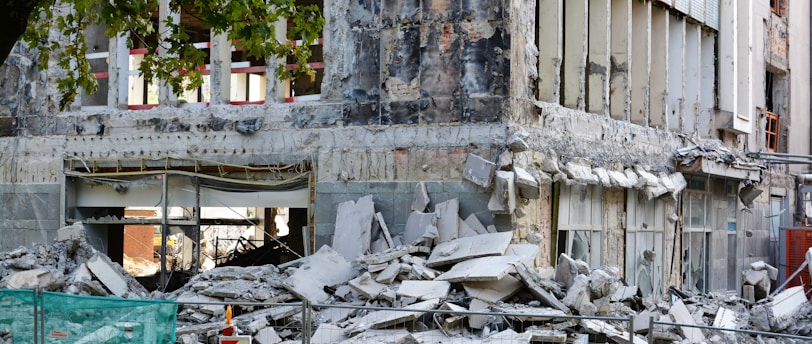

The Philippines sits along the Pacific Ring of Fire, one of the most seismically active regions on Earth. For building contractors and property managers, this isn't just a geography fact — it's a daily risk that has to be designed for, built for, and monitored for. That's where a seismic accelerograph comes in, and why more property owners across the country are turning to Ambraseys Earthquake Systems to get one installed correctly and kept compliant.
What Is a Seismic Accelerograph?
A seismic accelerograph is an instrument that records the acceleration, velocity, and displacement of ground motion during an earthquake. Unlike simple seismographs used for scientific monitoring, accelerographs are built specifically to capture strong ground motion, the kind that can actually damage a structure, giving engineers real, building-specific data on how a structure responded during a seismic event.
It's Not Optional. It's the Law.
Many contractors are surprised to learn that installing earthquake recording instrumentation isn't just good practice; it's a legal requirement for a large share of buildings in the country. The Department of Public Works and Highways, through its National Building Code Development Office, issued guidelines requiring Earthquake Recording Instrumentation (ERI) for buildings located in Seismic Zone 4, which covers virtually the entire Philippines except Palawan and Tawi-Tawi. Under the National Structural Code of the Philippines, buildings taller than 50 meters must have at least three interconnected accelerographs.
Compliance isn't a one-time checkbox either. Installing an accelerograph is a prerequisite for securing a Certificate of Occupancy on new construction and for renewing the Annual Certificate of Inspection on existing buildings. Local Building Officials and City Engineers monitor compliance and submit regular reports to DPWH, meaning a missing or malfunctioning instrument can directly hold up permits, occupancy, and inspections. All things that cost contractors and property owners real time and money.
The Business Case, Beyond Compliance
For contractors: An accelerograph isn't just paperwork — it's data. When a strong earthquake hits, the recorded information tells structural engineers exactly how a building actually performed, where stress concentrated, and whether any hidden structural issues need urgent attention. That's invaluable both for protecting your professional reputation on a project and for defending your work if a structure's performance is ever questioned after a seismic event.
For property managers: Life-safety decisions after an earthquake are often made under pressure and incomplete information. An accelerograph gives you objective, real-time data to base evacuation or re-entry decisions on, rather than guesswork. It also helps you track aftershocks accurately, so you're not needlessly evacuating tenants, or worse, allowing people back into a building that isn't actually safe.
The Cost of Getting It Wrong
A poorly installed, uncalibrated, or unmaintained accelerograph can be worse than having none at all. It can produce inaccurate readings, fail regulatory inspection, or simply stop working when you need it most. Maintenance isn't optional either. Building owners are responsible for keeping the system serviced, and lapses can jeopardize both safety and compliance status.
Partner With Specialists Who Know the System
This is where Ambraseys Earthquake Systems comes in. We handle the full lifecycle of seismic instrumentation — from site assessment, DPWH-compliant design, and professional installation, to ongoing calibration and maintenance — so contractors and property managers can focus on running their projects and buildings, not chasing paperwork or troubleshooting equipment.
A properly installed and maintained seismic accelerograph isn't just a regulatory checkbox. It's one of the most cost-effective investments you can make in the safety of your tenants, the integrity of your structure, and the long-term value of your property.
Ready to get compliant and stay protected? Contact Ambraseys Earthquake Systems today to discuss your seismic accelerograph installation and maintenance needs.
Visit Us
10 OP Cyberone Building
11 Eastwood Avenue
Bagumbayan, Quezon City 1110 Philippines
Social Media
Smart - (+63) 919-296-5410
Globe - (+63) 906-577-6739
Email - info@ambraseys.ph

Contact

A brand of Skempton Construction Corporation: